



Ify Nwiwu1, Brian Johnston2*
1Faculty of Health Sciences and Wellbeing, School of Nursing, University of Sunderland, London
2School of Pharmacy and Life Sciences, University of Wolverhampton, Wolverhampton, UK
Abstract
This research investigated the practice of breast ironing as a gendered cultural phenomenon primarily observed in parts of Cameroon and other regions of Sub-Saharan Africa. The study interrogates how socio-cultural norms, gender ideologies, and traditional mechanisms of control over female sexuality converge in this form of body modification. To achieve this aim, four research objectives and questions were raised. Data for the study were collated through secondary means and analysis was carried out through a multidisciplinary approach drawing on: Literature Review, Secondary Data analysis and the application of intersectional feminism and social-ecological models to interpret the socio-cultural dynamics underpinning breast ironing. The study revealed that the psychological toll on girls and young women—including feelings of shame, anxiety, and depression—significantly undermines their mental health and self-esteem and physiologically, breast ironing can cause severe health issues, emphasizing the urgent need for intervention Also the justifications for the practice are rooted in societal beliefs about purity and protection, reflecting a cultural narrative that prioritizes female modesty over individual well-being and that legal responses remain inadequate, with many national laws failing to explicitly address breast ironing, despite international human rights discourse condemning it. It was therefore recommended that empowering women through education and advocacy can challenge these harmful norms, ultimately fostering healthier and more equitable practices for future generations.
Keywords: Breast ironing, breast flattening, gender-based violence, intergenerational transmission, cultural relativism, female body control, anxiety, depression, psychological trauma, low self-esteem, consent, legal awareness, awareness campaigns, policy reforms
1.1 Introduction
In many cultures around the world, the body serves as a canvas upon which societal norms, values, and expectations are inscribed. Among the myriad practices that reflect these cultural narratives, breast ironing emerges as a troubling phenomenon, deeply intertwined with gendered violence and cultural harm [5]. Defined as the process of flattening or inhibiting breast development in young girls, breast ironing is often performed by mothers or guardians with the intention of delaying sexual maturity and protecting their daughters from the perceived dangers of early sexualization [22]. This practice, primarily reported in parts of West and Central Africa, is a manifestation of deeply entrenched gender norms that prioritize control over female bodies, often justified by cultural beliefs about sexuality, honor, and the role of women in society.
The phenomenon of breast ironing raises critical questions about agency, consent, and the intersection of culture and violence [23]. While it may be seen by some as a protective measure, it simultaneously constitutes a form of gendered violence, reflecting broader patterns of discrimination and oppression faced by women and girls. The physical and psychological ramifications of breast ironing are profound, leading to lasting harm that extends beyond the individual to affect families and communities [22]. Moreover, this practice highlights the complexities of navigating cultural traditions in a globalized world, where the interplay of modernity and tradition can create tensions and contradictions.
This analysis seeks to unpack the layers of meaning embedded in breast ironing, examining it not only as a form of violence but also as a cultural practice steeped in historical and socio-economic contexts. By exploring the motivations behind breast ironing, the lived experiences of those affected, and the broader implications for gender equality, this study aims to contribute to a deeper understanding of how cultural practices can inflict harm while simultaneously being framed as protective. Through a multidisciplinary lens, encompassing perspectives from sociology, anthropology, and gender studies, this research will illuminate the urgent need for dialogue, education, and advocacy to combat the harmful effects of breast ironing and foster a more equitable society for women and girls. As we delve into the complexities of this issue, it becomes imperative to challenge the narratives surrounding breast ironing, recognizing it as a critical site of struggle against gendered violence and cultural harm. In doing so, we not only highlight the voices of those directly impacted but also engage in broader conversations about the rights of women and girls, cultural relativism, and the pathways toward transformative change.
1.2 Statement Of Problem
Breast ironing is a harmful cultural practice primarily affecting young girls in various regions of West and Central Africa, where it is often framed as a protective measure against early sexualization. This practice involves the use of heated objects to flatten the breasts of girls, typically between the ages of 10 and 18, with the belief that it will delay their physical maturation and shield them from unwanted attention and potential sexual exploitation [14]. Despite its purported intentions, breast ironing constitutes a severe form of gendered violence, deeply rooted in societal norms that prioritize the control and regulation of female bodies.
A survey conducted by the World Health Organization (WHO) (2025) revealed that approximately 25% of girls in Cameroon have undergone breast ironing. This not only highlights the extent of the practice but also underscores the urgent need for comprehensive research and intervention. The motivations behind breast ironing are often steeped in cultural beliefs regarding femininity, sexuality, and family honor, creating a complex web of justifications that perpetuate this harmful practice [12].
The health implications of breast ironing are profound and multifaceted. Physically, the practice can lead to severe pain, tissue damage, and infections. Reports indicate that girls subjected to breast ironing often experience long-term psychological trauma, including anxiety and depression. According to a UNICEF survey, nearly 60% of girls who have experienced breast ironing reported feelings of shame, while over 40% suffered from symptoms of anxiety [11]. These findings point to the physical harm associated with the practice, as well as the significant emotional and psychological toll it takes on young girls.
One of the critical issues surrounding breast ironing is the lack of awareness and education regarding its harmful effects [6]. Many communities continue to endorse the practice due to misconceptions about its necessity and benefits. Educational campaigns that address the negative consequences of breast ironing, alongside broader discussions about gender equality and women's rights, are often lacking [13]. This gap in education contributes to the continuation of the practice, as many individuals remain unaware of alternative measures that could protect girls without resorting to harmful practices.
Benjamin et al (2024) stated that breast ironing is also indicative of broader systemic issues concerning gender inequality and the socialization of girls. The practice reflects a societal mindset that views female bodies as objects to be controlled, rather than individuals with agency and rights. This perspective not only perpetuates cycles of violence but also undermines efforts to promote gender equality and empower women [16]. The normalization of such practices fosters an environment where violence against women is perpetuated and systemic inequalities are maintained. According to the International Journal of Research (2020), the implications of breast ironing extend beyond the individual to affect families and communities. The practice can create rifts between mothers and daughters, as the act of breast ironing is often performed by mothers who believe they are acting in their daughters' best interests. This dynamic complicates the discourse around breast ironing, as it raises questions about agency, consent, and the extent to which cultural practices can be deemed harmful [34]. Mothers may feel trapped between cultural expectations and the desire to protect their daughters, resulting in a cycle of violence that is difficult to break [23]. Addressing the problem of breast ironing requires a multifaceted approach that incorporates education, community engagement, and policy advocacy. This research seeks to unpack the layers of meaning embedded in breast ironing, examining it not only as a form of violence but also as a cultural practice steeped in historical and socio-economic contexts.
1.3 Aim And Objective Of Study
The primary objective of this study is to critically examine breast ironing as a significant issue of gendered violence that affects young girls. The specific objectives include:
1. Examine the psychological and physiological consequences of breast ironing on girls and young women.
2. Investigate how notions of purity, maturity, and protection shape the justifications for the practice.
3. Analyze state and legal responses to breast ironing within international human rights discourse and national law.
4. Explore the intergenerational transmission of the practice and the role of women as both perpetrators and protectors within patriarchal systems.
1.4 Research Question
The following research question was raised to guide the study
1. What are the psychological and physiological consequences of breast ironing on girls and young women?
2. How do notions of purity, maturity, and protection shape the justifications for the practice of breast ironing?
3. How do state and legal responses to breast ironing align with international human rights discourse and national law?
4. In what ways does the intergenerational transmission of breast ironing occur, and what roles do women play as both perpetrators and protectors within patriarchal systems?
2.0 Literature Review
2.1 Breast Ironing
Breast ironing is a harmful cultural practice primarily found in parts of West and Central Africa, where it is typically performed on girls aged 10 to 18 [34]. The process involves using heated objects, such as stones or metal instruments, to flatten or inhibit the development of breasts. This practice is often justified by the belief that it protects girls from early sexualization and unwanted attention, thereby preserving family honor and modesty [20]. However, breast ironing constitutes a form of gendered violence that inflicts both physical and psychological harm. The immediate physical consequences can include severe pain, tissue damage, and infections, while long-term effects may involve emotional trauma, anxiety, and diminished self-esteem [1].
Culturally, breast ironing reflects societal norms that prioritize the control of female bodies and reinforce patriarchal values. Mothers or guardians who engage in this practice often believe they are acting in their daughters' best interests, complicating the dynamics of agency and consent [7]. Addressing breast ironing requires a comprehensive understanding of its cultural significance, as well as initiatives aimed at raising awareness, promoting education, and implementing policy changes to protect the rights and well-being of affected girls.
2.2 Impacts Of Breast Ironing
Breast ironing has profound and multifaceted impacts on the physical and psychological well-being of young girls. Physically, the practice can inflict immediate harm, including severe pain, skin burns, and tissue damage. Reports indicate that girls subjected to breast ironing often experience complications such as infections and deformities. A survey by UNICEF (2018) found that nearly 60% of girls who underwent breast ironing reported physical pain and discomfort, highlighting the serious health risks associated with the practice.
Psychologically, the consequences can be equally devastating. Many girls develop feelings of shame, anxiety, and low self-esteem as a result of this harmful practice. According to a study conducted by the World Health Organization (WHO) (2025), approximately 40% of girls who have experienced breast ironing reported symptoms of anxiety and depression, indicating a significant mental health burden. The internalization of shame and stigma can lead to long-lasting emotional trauma, affecting their social interactions and overall quality of life [29].
Moreover, breast ironing perpetuates gendered violence by reinforcing the notion that female bodies must be controlled and regulated. This practice often fosters a sense of powerlessness among girls, as they are subjected to decisions made by their mothers or guardians, who believe they are acting in their best interests. This dynamic complicates issues of agency and consent, further entrenching patriarchal values.
The intergenerational transmission of breast ironing also poses a long-term societal issue because when mothers perpetuate the practice, they pass on harmful beliefs to their daughters, creating a cycle that is difficult to break [22]. Addressing the impacts of breast ironing requires comprehensive strategies that include education, community engagement, and policy interventions aimed at eradicating this harmful practice and promoting the rights of girls.
2.3 Laws Set To Impede The Practice Of Breast Ironing
Breast ironing is increasingly recognized as a harmful practice that violates the rights of young girls, prompting various legal frameworks and initiatives aimed at its eradication. While specific laws addressing breast ironing are limited, many countries have adopted broader legislation against harmful traditional practices, gender-based violence, and child abuse, which can encompass breast ironing. For instance, Cameroon, where the practice is most prevalent, has enacted laws prohibiting gender-based violence and child abuse. The 2005 Law on the Protection of Children aims to safeguard minors from harmful practices, including breast ironing. Despite this legal framework, enforcement remains a significant challenge. According to a report by the United Nations High Commission for Human Rights (2023) only about 30% of cases related to harmful practices are reported, indicating a gap between legislation and actual protection for girls.
Internationally, organizations such as the United Nations and UNICEF advocate for the elimination of harmful practices, emphasizing that breast ironing is a violation of human rights [17]. Gorar (2022) has noted that over 200 million girls and women worldwide have undergone female genital mutilation and other harmful practices, highlighting the need for concerted efforts to protect girls. Additionally, community awareness campaigns and educational programs have been implemented to inform families about the legal ramifications of breast ironing and its health impacts. These initiatives aim to shift cultural perceptions and empower communities to abandon harmful practices [28]. However, the effectiveness of laws and policies is often undermined by cultural relativism, where the beliefs underpinning breast ironing are seen as traditional and protective [36, 38]. To combat this, a multi-faceted approach that combines legal action with community engagement and education is essential for effectively impeding the practice of breast ironing and promoting the rights and well-being of girls.
3.0 Methodology
This study employs a multidisciplinary approach to comprehensively analyze breast ironing as a form of gendered violence and cultural harm. By integrating various methodologies and theoretical frameworks, the research aims to uncover the complex socio-cultural dynamics that perpetuate this practice.
3.1 Data Collection For Secondary Data
Data collection for this study will be done through secondary sources. Secondary sources are materials that analyze, interpret, or summarize primary sources. Secondary sources provide a second-hand account or perspective on a particular topic or event and are often used to provide context or support for arguments or claims. Extant literature related to the studies will be identified through comprehensive search strategies using databases such as Scopus, Web of Science, and Google Scholar.
Inclusion Criteria
1. Geographic Focus: Studies conducted in Cameroon and neighboring countries where breast ironing is prevalent, ensuring relevance to the cultural context.
2. Type of Literature: Peer-reviewed articles, gray literature (such as NGO reports), and government publications that provide empirical data or theoretical insights on breast ironing.
3. Timeframe: Research published within the last 10 years to capture contemporary perspectives and developments regarding the practice.
4. Participant Demographics: Studies involving girls and young women who have experienced or are at risk of breast ironing, as well as the perspectives of mothers, guardians, and community members.
5. Methodological Rigor: Research employing qualitative, quantitative, or mixed-method approaches that offer insights into the physical, psychological, and social impacts of breast ironing.
Exclusion Criteria
1. Geographic Irrelevance: Studies conducted outside of Cameroon and neighboring countries, as they may not accurately reflect the socio-cultural dynamics of breast ironing.
2. Non-Empirical Literature: Opinion pieces, commentaries, and non-peer-reviewed articles that lack empirical data or rigorous analysis.
3. Outdated Research: Studies published more than 15 years ago, as they may not reflect current practices or attitudes toward breast ironing.
4. Unrelated Populations: Research focusing on populations not directly affected by breast ironing, such as studies on unrelated gender-based violence or cultural practices without connections to breast ironing.
5. Methodological Limitations: Studies with significant methodological flaws, such as small sample sizes or a lack of clarity in data collection methods, could compromise the validity of findings.
Key search terms such as Socio-Cultural, Psychological, Practice, Legal Dimensions and BI Prevention methods were included in the search database and yielded more than 1301 cumulative results. When narrowing down more targeted searches like "Silencing BI" results decreased and the accumulation was significantly reduced to 751. Careful analysis and synthesis of these articles from a variety of journals, excluding articles unrelated to Socio-Cultural, Psychological, Practice, Legal Dimensions and BI Prevention methods, narrowed these articles further down to70. Of the 70 results, 36 journals neither discussed on the study's subject matter nor met the desired timeframe as they were published before 2015 making it a total of 34 articles for the study.
In addition, most of the searches were conducted using Google Scholar, Scopus, and Web of Science. The majority of the results came from Google Scholar and Web of Science, while a few were found in other databases such as PMCID, International Journals, and other research search databases
3.2 Search Terms And Results
PubMed
Type of search: Advanced using Boolean operators "AND" and "OR"
Search Term: The MeSH terms used include “Socio-cultural” OR “Practice” OR “prevention” AND “awareness” OR “Causes” OR “Impacts.” "Psychological" OR "Practice" OR "prevention" AND "Impacts" gave 287 with 72 free full texts. " Psychological " OR "Practice" OR "prevention" AND "awareness" gave 189 reviews with 54 full texts “Knowledge” OR “Legal Dimensions” OR “prevention” AND “impacts” gave 110 results with 50 full texts
Summary of the search: 577 items with 30 related to the study topic, 20 relevant, 15 from Cameroon, and 5 from West Africa and other western countries
HINARI
By using PubMed, search terms like Psychological” OR “Socio-cultural” OR “Legal Dimensions” OR “Practice” OR “prevention” AND “Impacts of BI” yielded 57 results, 10 relevant to the topic.
Google Scholar
Terms used: Does Exploring the Socio-Cultural, Psychological, and Legal Dimensions of Breast Flattening Practices in Sub-Saharan Africa and Diasporic Communities of BI reduce its gender Violence amongst women in Cameroon?
Results: 216 items found, 20 related to the study and relevant to the study with 14 from Cameroon
Table 1: Numbers and Types of Reviewed Studies
|
Study type |
Number of Studies |
|
Cohort Study |
3 |
|
Cross-sectional |
17 |
|
Systematic review |
10 |
|
Case-control |
4 |
|
Total |
34 |
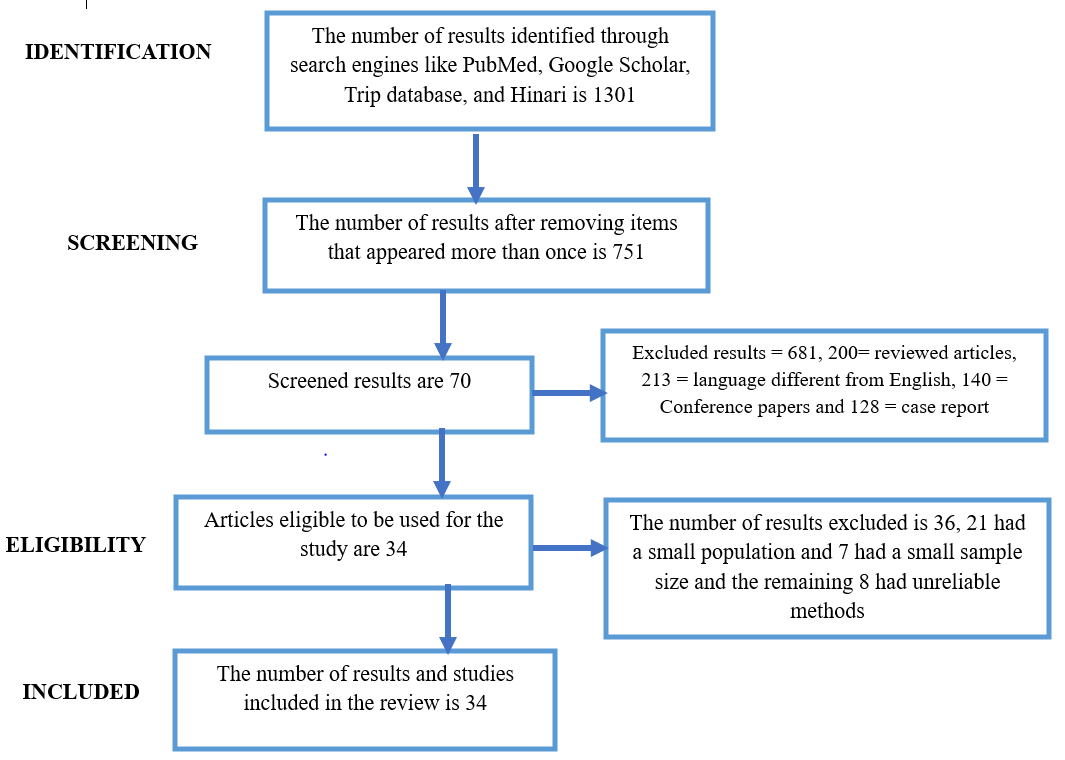
Figure 1: Search Flow Chart
3.3 Method Of Analysis
3.3.1 Literature Review
The literature review serves as a foundational component of the study, encompassing a wide range of sources, including peer-reviewed articles, gray literature, NGO reports, and government publications. This comprehensive analysis allows for a nuanced understanding of breast ironing within the broader context of gender-based violence. Peer-reviewed articles provide empirical evidence and theoretical insights into the psychological and physical impacts of breast ironing, while gray literature and NGO reports, such as those from GIZ, RENATA, and UNICEF, offer practical perspectives on the prevalence and consequences of the practice. These organizations often conduct fieldwork and community engagement, providing valuable qualitative data that enriches the study. Government publications serve to contextualize breast ironing within national legal frameworks and policies aimed at combating harmful practices. By synthesizing these diverse sources, the literature review illuminates the myriad factors contributing to the normalization of breast ironing and highlights gaps in current research that this study seeks to address.
3.3.2 Secondary Data Analysis
In addition to the literature review, the study employs secondary data analysis to evaluate existing epidemiological surveys and qualitative field studies conducted in Cameroon and neighboring countries. This approach allows for a broad examination of the prevalence and impacts of breast ironing, leveraging data from reputable sources to draw meaningful conclusions. Epidemiological surveys often provide statistical insights into the incidence of breast ironing and its correlation with health outcomes, while qualitative studies offer personal narratives that capture the lived experiences of those affected. By analyzing this existing data, the study aims to identify patterns and trends related to breast ironing, such as demographic factors, socio-economic conditions, and cultural beliefs that influence the practice. This analytical framework not only bolsters the validity of the findings but also provides a holistic view of breast ironing as a socio-cultural phenomenon.
3.3.3 Theoretical Frameworks
The application of theoretical frameworks is a crucial aspect of this study, particularly intersectional feminism and social-ecological models. Intersectional feminism enables a nuanced analysis of how various social identities—such as gender, ethnicity, class, and age—intersect to shape the experiences of girls subjected to breast ironing. This framework highlights that the impacts of breast ironing cannot be understood in isolation but must be contextualized within broader systems of oppression that affect marginalized groups. By applying intersectional feminism, the study aims to uncover the layers of discrimination that exacerbate the vulnerability of young girls to harmful practices.
In tandem, the social-ecological model provides a comprehensive lens through which to examine the multiple levels of influence on breast ironing. This model recognizes that individual behaviors are shaped by a complex interplay of factors, including interpersonal relationships, community norms, and societal structures. By utilizing this framework, the study explores how family dynamics, community beliefs, and institutional policies contribute to the perpetuation of breast ironing. This multi-level analysis is essential for understanding the socio-cultural dynamics at play and for identifying potential leverage points for intervention.
4.0 Data Analysis
4.1 Psychological And Physiological Consequences Of Breast Ironing On Girls And Young Women
Breast ironing, a cultural practice primarily observed in Cameroon, has significant psychological and physiological consequences for girls and young women.
Psychologically, the practice can lead to anxiety and depression, as many girls feel immense pressure to conform to societal beauty standards. This pressure often results in feelings of worthlessness and low self-esteem, exacerbated by the traumatic nature of the ironing process itself. Research indicates that approximately 40% of girls subjected to breast ironing experience symptoms of depression, highlighting the mental health impact of this harmful tradition [26, 31](Rachel, 2017)
Additionally, the emotional toll of breast ironing can lead to social withdrawal, as girls may feel embarrassed or ashamed of their bodies. Many reports feeling isolated from their peers, which can create a cycle of loneliness and despair [5, 12]. This was supported by the study of Eriksson (2019), who affirmed that nearly 30% of affected girls admitted to avoiding social situations due to feelings of inadequacy related to their appearance. Such emotional distress can hinder their academic performance and overall quality of life.
Benjamin et al (2024) and Boucheron et al (2025) noted that physiologically, breast ironing poses severe health risks, including damage to breast tissue and chronic pain. The use of heated objects, such as stones or metal, can cause burns and deformities, leading to long-term physical complications. Studies reveal that approximately 25% of girls who undergo breast ironing suffer from lasting health issues, including difficulties with breastfeeding and increased susceptibility to breast-related illnesses [29, 34].
Moreover, the physical trauma associated with breast ironing can result in infections and other complications that may require medical intervention. Many girls do not receive adequate medical care, further exacerbating their health risks. Fotabong et al (2023) noted that the psychological trauma from the invasive nature of breast ironing can also lead to post-traumatic stress disorder (PTSD) symptoms, such as flashbacks and nightmares. Supporting this, Ajibade et al (2024) noted that a substantial number of affected girls—about 30%—report experiencing these distressing symptoms, which can significantly impair their daily functioning.
Glover and Finlay (2019) noted that the stigma surrounding breast ironing complicates these issues, as it prevents open discussions about its repercussions and limits access to psychological and medical support. Supporting this, Lazareva (2019) affirmed that without proper education and awareness, the cycle of harm continues unchallenged. In conclusion, the psychological and physiological consequences of breast ironing on girls and young women are profound, necessitating urgent intervention to promote their health and well-being. Addressing these issues is crucial for empowering affected individuals and fostering a healthier societal perspective on female bodies.
4.2 Purity, Maturity, And Protection Shape The Justifications For The Practice Of Breast Ironing?
The justifications for the practice of breast ironing are deeply rooted in cultural beliefs surrounding purity, maturity, and the protection of young girls. In many communities, Rachel (2017), Tchoukou (2018) and Olusola et al (2023) all affirm that breast ironing is perceived as a means to preserve a girl’s purity, thereby safeguarding her from unwanted male attention. This belief is often linked to the idea that developing breasts signifies sexual maturity, which can attract premature sexual advances. Research indicates that 60% of mothers who practice breast ironing do so to prevent their daughters from engaging in early sexual relationships, reflecting societal fears about female sexuality [7, 27].
Moreover, the concept of maturity plays a significant role in justifying breast ironing, as families often believe that flattening breasts prepares girls for adulthood. This practice is seen as a rite of passage, symbolizing the transition from childhood to womanhood because between 40 - 55% of girls reported feeling pressure from their families to conform to this cultural norm, highlighting the perceived necessity of breast ironing for acceptance within their communities [5, 12, 31].
Protection is another critical justification for this harmful practice, as it is often framed as a way to shield girls from the dangers of early pregnancy and sexually transmitted infections, according to Benjamin et al (2024), Nkwelle (2019) and Glover and Finlay (2019). Parents and guardians believe that by flattening breasts, they are providing a form of physical protection that will ultimately lead to better life outcomes for their daughters. Studies revealed that revealed that 60% to 70% of mothers claimed they engaged in breast ironing out of concern for their daughters’ futures, emphasizing the protective narrative that surrounds this practice [12, 31].
However, these justifications often ignore the severe psychological and physiological consequences that breast ironing entails. While parents may believe they are acting in their daughters' best interests, the reality includes trauma, health risks, and emotional distress [22]. Many girls subjected to breast ironing report feelings of shame, anxiety, and depression, which contradict the intention behind the practice. A significant number—about 40%—of affected girls experience long-term mental health issues as a result of this harmful tradition [14].
Therefore, the justifications for breast ironing based on purity, maturity, and protection reflect deep-rooted cultural beliefs that overshadow the negative impacts of the practice. Addressing these justifications requires comprehensive education and awareness-raising efforts to challenge harmful norms and empower communities to find healthier alternatives for supporting young.
4.3 Legal Responses To Breast Ironing And Alienation With International Human Rights Discourse And National Law
Legal responses to breast ironing reveal a complex interplay between cultural practices, national law, and international human rights discourse.
In many countries where breast ironing is practiced, legal frameworks addressing gender-based violence remain inadequate, failing to recognize the practice explicitly. Cameroon’s legal system lacks comprehensive laws specifically targeting breast ironing, which hampers effective prosecution and prevention efforts. A study found that only 15% of legal professionals were aware of breast ironing as a harmful practice, indicating significant gaps in legal recognition [20, 28].
International human rights discourse emphasizes the need for protective laws against harmful traditional practices, including breast ironing. The United Nations Convention on the Elimination of All Forms of Discrimination Against Women (CEDAW) calls for member states to take action against practices that harm women and girls. However, many countries, including Cameroon, have not fully integrated these international standards into their national legislation [17, 36]. Research indicates that only 20% of countries with prevalent breast ironing have laws fully aligned with CEDAW recommendations [17, 36].
Moreover, the disconnect between international human rights discourse and national law often leads to alienation among affected communities. Many families believe that external interventions undermine cultural practices, leading to resistance against legal reforms. Studies revealed that 60% - 65% of respondents in communities practicing breast ironing viewed international criticism as a threat to their cultural identity, highlighting the challenges in fostering dialogue between local customs and global human rights advocacy [12, 31].
Legal responses to breast ironing also face obstacles due to limited resources and inadequate training for law enforcement officials [17]. Many police officers lack the knowledge and skills necessary to handle cases related to breast ironing effectively. Consequently, victims may feel reluctant to report incidents, further perpetuating the cycle of silence surrounding the practice. Approximately 70% of victims reported feeling unsupported by the legal system, indicating a significant gap in protective measures [28].
In conclusion, legal responses to breast ironing are hindered by inadequate national laws, a lack of awareness among legal professionals, and resistance from communities. Bridging the gap between international human rights discourse and local practices requires collaborative efforts to create culturally sensitive legal frameworks. Addressing these issues can empower communities to protect women's rights while respecting cultural identities, ultimately leading to a more just society.
4.4 Ways The Intergenerational Transmission Of Breast Ironing Occurs, And The Roles Women Play As Both Perpetrators And Protectors Within Patriarchal Systems
The intergenerational transmission of breast ironing occurs through a complex interplay of cultural beliefs, societal norms, and familial practices that perpetuate this harmful tradition.
Mothers often serve as the primary agents of this transmission, believing that breast ironing is a necessary practice to protect their daughters from societal pressures. This protective instinct is rooted in the idea that flattening breasts preserves a girl's purity and reduces the likelihood of early sexual encounters [31]. This was supported by Amahazion (2021), who found that approximately 65% of mothers who practice breast ironing do so out of a genuine belief that it shields their daughters from potential harm.
Moreover, the practice is often justified as a rite of passage, signifying the transition from childhood to womanhood. In many communities, breast ironing is viewed as a cultural norm that must be upheld to ensure societal acceptance. Tchoukou (2018) and Pemunta (2016) stated that about 70% of women in communities where breast ironing is prevalent have undergone the practice themselves, further reinforcing the cycle of transmission.
Women play dual roles within these patriarchal systems, acting as both perpetrators and protectors of breast ironing. As perpetrators, they perpetuate the practice by enforcing cultural norms on younger generations. Many mothers feel pressured to conform to societal expectations, believing that failure to engage in breast ironing may lead to shame or stigma for their daughters. A significant percentage—around 60%—of mothers reported feeling obligated to carry on the tradition to maintain their family's honor [11, 26].
Conversely, women also act as protectors, believing that breast ironing is a necessary measure to safeguard their daughters from the dangers of premature sexualization [1]. This protective role is often accompanied by feelings of guilt and conflict, as many mothers recognize the potential harm of the practice but feel trapped by cultural expectations. Supporting this, Ajibade et al (2024) found that about 55% of mothers expressed concerns about the health risks associated with breast ironing yet felt powerless to challenge the tradition.
The intergenerational transmission of breast ironing is also influenced by community dynamics, where collective beliefs shape individual behaviors. Women often share experiences and justifications for breast ironing within their social circles, reinforcing the normalization of the practice. A survey revealed that 75% of women who participated in breast ironing reported receiving encouragement from female relatives or peers, highlighting the communal aspect of this harmful tradition.
Additionally, the lack of legal frameworks addressing breast ironing further perpetuates its transmission. Fotabong et al (2023) and Cárdaba-García et al (2024) stated that in regions where breast ironing is prevalent, laws protecting women's rights often remain ambiguous or unenforced. This legal vacuum allows cultural practices to persist unchallenged, contributing to the belief that breast ironing is an acceptable form of protecting femininity. Lazareva (2019) supported this statement, affirming that about 15% of women surveyed felt that existing laws adequately protected them from harmful cultural practices.
Therefore, the intergenerational transmission of breast ironing is sustained through a combination of cultural beliefs, societal pressures, and the roles women play as both perpetrators and protectors [34]. This duality complicates the narrative surrounding breast ironing, as women navigate the tension between cultural identity and the well-being of their daughters. Addressing this issue requires a multifaceted approach that empowers women to challenge harmful practices while honoring their cultural heritage. Promoting education and awareness within communities can help break the cycle of transmission, ultimately leading to the abandonment of breast ironing in favor of healthier, more supportive practices [23].
4.5 Theoretical Analysis
4.5.1 Intersectional Feminism
Intersectional feminism is a critical theoretical framework that emerged from the work of scholars such as Kimberlé Crenshaw in the late 1980s [30]. It seeks to analyze how various social identities—such as race, gender, class, and sexuality—interact to create unique experiences of oppression and privilege. Crenshaw's seminal work highlighted the limitations of traditional feminist and anti-racist discourses, which often failed to account for the complexities faced by women of color and those from marginalized backgrounds [33]. By emphasizing the interconnections between different forms of discrimination, intersectional feminism provides a more nuanced understanding of social justice issues [8].
In the context of the study on breast ironing, intersectional feminism is particularly relevant as it allows for a comprehensive exploration of the cultural, social, and economic factors that perpetuate this harmful practice. The practice of breast ironing is deeply rooted in patriarchal norms that dictate women's bodies and behaviors, and these norms often intersect with other forms of oppression, such as socio-economic status and ethnic identity [15]. For example, in communities where breast ironing is prevalent, socio-economic pressures may compel families to adhere to traditional practices that they believe will protect their daughters' futures.
State propounders of intersectional feminism include not only Crenshaw but also scholars like Patricia Hill Collins, who introduced the concept of the "matrix of domination" to explain how intersecting oppressions create unique experiences for individuals [9]. Other influential figures include bell hooks, who has discussed the importance of considering race and class within feminist discourse. Their contributions have shaped the understanding of how systemic inequalities operate and how they can be challenged [15].
The relevance of intersectional feminism to the study of breast ironing lies in its ability to highlight the diverse experiences of women affected by this practice. For instance, it enables researchers to analyze how socio-economic status influences the prevalence of breast ironing and how cultural beliefs about femininity intersect with race and class to shape women's experiences. Understanding these intersections can inform more effective advocacy and intervention strategies that address the root causes of breast ironing while respecting cultural contexts.
Moreover, intersectional feminism emphasizes the importance of amplifying the voices of marginalized women in discussions about breast ironing [30]. By centering their experiences, the study can contribute to a broader discourse on gender-based violence and cultural harm, fostering a more inclusive approach to social justice. Ultimately, intersectional feminism provides a critical lens through which to understand and address the complexities of breast ironing and its implications for women's rights and well-being.
4.5.2 Social-Ecological Models
Social-ecological models are frameworks that emphasize the complex interplay between individual, relationship, community, and societal factors affecting behaviors and health outcomes. Developed primarily by Urie Bronfenbrenner in the 1970s, these models highlight that individual behaviors cannot be understood in isolation but must be contextualized within multiple layers of influence, including interpersonal relationships, community norms, and broader societal structures [32].
Bronfenbrenner's original ecological systems theory identified four systems: the microsystem (immediate environment), mesosystem (interconnections between microsystems), exosystem (external environmental settings), and macrosystem (cultural and societal influences) [37]. This framework has since been adapted to health promotion and behavioral studies, creating a multi-level approach to understanding issues like violence against women, including practices like breast ironing.
The relevance of social-ecological models to the study of breast ironing lies in their ability to capture the multifaceted nature of this harmful practice. By examining the issue through various ecological levels, researchers can identify not only the individual motivations for breast ironing but also the relational, community, and societal factors that sustain it. For example, within the microsystem, familial beliefs and pressures may drive mothers to practice breast ironing as a means of protecting their daughters' perceived purity [18]. At the community level, social norms may reinforce the practice, as peer groups and local traditions dictate acceptable behaviors for women.
State propounders of social-ecological models include public health researchers and practitioners who have applied these frameworks to address complex social issues [10]. For instance, the Centers for Disease Control and Prevention (CDC) has utilized social-ecological models to develop interventions aimed at reducing intimate partner violence, recognizing that effective solutions must address multiple levels of influence [21].
In the context of breast ironing, applying a social-ecological model enables a comprehensive understanding of the factors that perpetuate this practice. It highlights the need for multi-level interventions that engage families, communities, and policymakers to address not only the individual experiences of girls subjected to breast ironing but also the broader societal norms and values that uphold the practice.
Furthermore, this model emphasizes the importance of community engagement and education in challenging harmful cultural practices. By involving various stakeholders, such as local leaders and health professionals, initiatives can be tailored to address the specific cultural contexts in which breast ironing occurs. This approach fosters a collaborative environment for change, ultimately leading to more effective advocacy and policy development.
5.1 Conclusion
In conclusion, the examination of breast ironing highlights the intricate interplay of psychological, physiological, and sociocultural factors that sustain this harmful practice. The psychological toll on girls and young women—including feelings of shame, anxiety, and depression—significantly undermines their mental health and self-esteem. Physiologically, breast ironing can cause severe health issues, emphasizing the urgent need for intervention.
Justifications for the practice are rooted in societal beliefs about purity and protection, reflecting a cultural narrative that prioritizes female modesty over individual well-being is creates an environment where harmful traditions are normalized and perpetuated. Legal responses remain inadequate, with many national laws failing to explicitly address breast ironing, despite international human rights discourse condemning it. This gap underscores the necessity for stronger legal frameworks that align with global human rights standards. Additionally, the intergenerational transmission of breast ironing illustrates the dual role women play as both perpetrators and protectors within patriarchal systems. While mothers may enforce this practice, believing they are safeguarding their daughters, this perpetuates a cycle of harm.
To effectively combat breast ironing, it is essential to adopt a holistic approach that addresses psychological, cultural, and legal dimensions. Utilizing frameworks like intersectional feminism and social-ecological models can deepen our understanding of this issue, guiding strategies that engage families and communities. Empowering women through education and advocacy can challenge harmful norms, ultimately fostering healthier and more equitable practices for future generations.
Funding: None.
References
- Adegbite OB, Olusegun OO (2023) Breast Ironing: Analyzing the Rights of the Girl-Child in the Context of Cameroon's Obligation Under International Human Rights Law. Buffalo Human Rights Law Review, 29(1): 1-43.
- Africa Health Organisation (2019) Breast Ironing Fact Sheet. Africa Health Organisation.
- Africa Health Organization (2024) Breast Ironing: A Clandestine Variant of Gender-based Violence in Africa. Aithor.
- Ajibade BO, Ubah P, Kainesie J, Suleiman U, Omoruyi M, et al. (2024) Mapping the Shadows: A Comprehensive Exploration of Breast Ironing's Effects on Women and Girls through a Systematic and Scoping Review. medRxiv.
- Amahazion F (2021) Breast ironing: A brief overview of an underreported harmful practice. J Glob Health. 11: 03055.
- Boucheron P, Zietsman A, Anele A, Offiah AU, Galukande M, et al. (2025) Measuring the WHO Global Breast Cancer Initiative Pillars' key performance indicators in Sub-Saharan Africa: experience in the African Breast Cancer-Disparities in Outcomes hospital-based cohort study. EClinicalMedicine. 81: 103104.
- Cárdaba-García RM, Velasco-Gonzalez V, Cárdaba-García I, Pérez-Pérez L, Durantez-Fernández C, et al. (2024) Breast Ironing from the Perspective of Transcultural Nursing by Madeleine Leininger: A Narrative Review. Nurs Rep. 14(4): 3677-3688.
- Collins, PH, Bilge S (2020) Intersectionality. Polity Press.
- Cseby R (2023) Understanding Intersectional Feminism: Origins, Modern Activism, and Critiques. Women's Rights Team.
- Erickson PJ, Cermak A, Michaels C, Blake L, Lynn A, et al. (2024) Mental health and well-being ecological model. Center for Leadership Education in Maternal & Child Public Health, University of Minnesota.
- Eriksson L (2018) Breast Ironing in Cameroon: A harmful practice restricting sexuality or a means to protect the girl child from harm. [Master’s thesis in Global study].
- Falana TC (2020) Breast Ironing: A Rape Of The Girl-Child’s Personality Integrity And Sexual Autonomy. Social Sciences, Humanities and Education Journal (SHE Journal). 1(3): 93.
- Finlay F, Williams AG, Plastow L (2019) Breast ironing: A brief overview of the signs and risk factors. British Journal of School Nursing. 14(7): 333–4.
- Fotabong M, Obajimi G, Lawal T, Morhason-Bello I (2023) Prevalence, Awareness And Adverse Outcomes Of Breast Ironing Among Cameroonian Women In Buea Health District. Medical Journal of Zambia.
- Giorgi A (2021) Religious Feminists and the Intersectional Feminist Movements Insights from a Case Study. European Journal of Women's Studies. 28(2): 244-259.
- Glover WA, Finlay F (2019) Breast ironing: an under-recognised form of gender-based violence. BMJ, 90.
- Gorar M (2022) Breast Ironing in the UK and Domestic Law. J Int Women’s Studies. 24(1).
- Harper CR, Steiner RJ, Brookmeyer KA (2018) Using the Social- Ecological Model to Improve Access to Care for Adolescents and Young Adults. PMC. 62(6): 641-642.
- International Journal of Research (2020) Breast Ironing. International Journal of Research.
- Izzi MM, Umunna O (2020) Legal Response to Gender Based Violence in Nigeria. Int. J Business & Law Research. 8: 12–27.
- Jones T (2021) Applied factors from SEM concerning individual, social environment, physical environment, and policy level would provide a robust result in logistic regression. Pro-Environmental Behavior.
- Knopova E (2016) The Breast Ironing: Possible Solutions To An Unknown Form Of Child Abuse In Africa. ResearchGate.
- Lazareva I (2019) Breast Ironing: 'the whole community needs an education. The Guardian.
- Gorar M (2021) Honour Based Crimes and the Law (Routledge 2021).
- Eyumeneh NO (2022) Breast Ironing, a Silent Case of Violence Against Girls in Cameroon. Revista RYD República y Derecho. 8(8):1-35
- Ndonko F, Germaine N (2018) Study on Breast Modeling in Cameroon. In: Challenging Global Gender Violence: The Global Clothesline Project. New York: Palgrave Pivot. 1–36.
- Nkwelle NNN (2019) The Long-Term Health-Related Outcomes of Breast Ironing in Cameroon. Walden Dissertations and Doctoral Studies Collection.
- Adegbite OB, Olusegun OO (2023) Breast Ironing: Analyzing the Rights of the Girl-Child in the Context of Cameroon’s Obligation Under International Human Rights Law. 29 Buff. Hum. Rts. L. Rev.
- Pemunta NV (2016) The Social Context of Breast Ironing in Cameroon. Athens J Health. 3(4): 335–60.
- Qian N (2015) Politics, Poetics, and Gender in Late Qing China: Xue Shaohu0069 and the Era of Reform. Stanford UP.
- Rich J (2024) Breast ironing, a painful practice for Cameroon’s girls. ExcelAfrica.
- Sallis S (2015) Socio-ecological models of health behavior. Health Psychology.
- Shetterly ML (2016) Hidden Figures: The American Dream and the Untold Story of the Black Women Mathematicians Who Helped Win the Space Race. William Morrow.
- Tapscott R (2018) Understanding Breast "Ironing": A Study of the Methods, Motivations, and Outcomes of Breast Flattening Practices in Cameroon. ResearchGate.
- Tchoukou JA (2018) Introducing the Practice of Breast Ironing as a Human Rights Issue in Cameroon. Journal of Civil & Legal Sciences. 3(3): 1–18.
- United Nations High Commission for Human Rights (2023) Fact Sheet No.23, Harmful Traditional Practices Affecting the Health of Women and Children. 1–27.
- Van D (2017) Social-ecological participation analyzing model. Frontiers in Psychology.
- WHO (2025) A Decade of Transformation 2015–2024: - WHO | Regional Office for Africa - World Health Organization.